When Anyone Can Pitch Perfectly, Who Can You Trust?
As AI transforms capital markets, is the human element becoming less valuable? Charles Towle argues that the opposite is true, exploring why trust, professional judgment, and personal relationships give you the edge—and how technology can strengthen, rather than replace, the human connections that move capital.
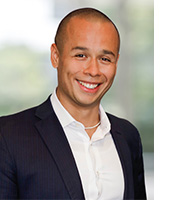 By Charles Towle, Co-Founder and Managing Partner, US Capital Global
Artificial intelligence has made it possible for almost anyone to produce a polished, sophisticated investment presentation in minutes. But while every opportunity might look polished on paper, are the relevant highlights presented clearly enough for investors to distinguish genuine substance from a persuasive pitch? This is becoming an increasingly important question in private capital markets, where the credibility of the people behind an investment can matter as much as the numbers on the page. Since investors and analysts have their own AI agents, the human touch can make a big difference in making a presentation both accurate and compelling.
AI transforms how we identify, analyze, screen, and present investment opportunities. It can review lengthy financial documents, summarize complex transactions, examine risk disclosures, and reduce processes that once required days of work to mere seconds. These are remarkable advances, and we should embrace them. Yet as technology makes investment information faster and easier to review and produce, I believe something interesting is happening: the human relationships behind that information are becoming more valuable, not less. Amid all the corporate-speak and noise in AI-generated summaries, human intelligence begins to stand out.
When a Perfect Pitch Is No Longer Enough
Investors today can quickly review investment opportunities using their own AI agents, while the accompanying AI-prepared presentations are increasingly difficult to distinguish by appearance alone. A compelling presentation may capture attention, but it tells us relatively little about whether a business can deliver on its promises.
The challenge is compounded by AI’s ability to generate convincing conclusions from layers of assumptions that, without human supervision, could compromise sound investment decisions. A dense pitch is no guarantee of a sound investment, and investors must look beyond the presentation to verify counterparties, assess track records, and understand the people responsible for execution. It is essential to meet the management teams as soon as possible to assess their competence and leadership qualities. This is where experienced financial professionals and trusted relationships can provide valuable insight, alongside rigorous due diligence.
Recent research reinforces the continuing importance of human judgment. A 2026 HSBC study involving approximately 10,000 affluent and high-net-worth individuals found that 73% use AI for finance and investment, yet only 12% identified AI as the most influential factor in their last investment decision. By comparison, 37% cited financial professionals and institutions. Investors are increasingly comfortable using technology to explore opportunities, but when it comes to committing capital, human expertise still carries considerable weight.
Why Relationships Still Open Doors
In investment banking, access to capital has never been simply about identifying someone with capital. It is about reaching the right people, understanding their priorities, investment timing, and strategic goals, and establishing the confidence needed for a meaningful conversation that matches capital’s goals with opportunities. Understanding investors’ goals and investment appetite, coupled with a clear presentation from properly vetted counterparties, creates a safer environment for investment decisions. Trusted introductions from respected counterparties can make the difference between an investment opportunity receiving serious consideration and disappearing into an already crowded inbox.
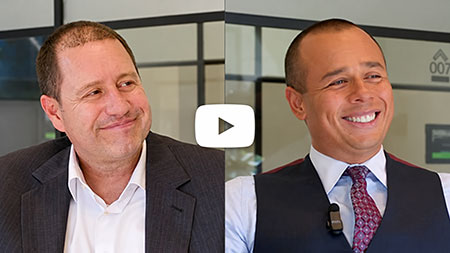
We see this firsthand at US Capital Global, particularly in cross-border transactions. In one instance, a client in Los Angeles was seeking financing, but the relationship that helped open the door was not in California. It came through our London office, which had an established connection with the financial institution’s parent company in the Middle East. That relationship facilitated an introduction back to the institution’s Los Angeles office, ultimately leading to financing.
The opportunity itself had not changed; what changed was the credibility of the introduction. This illustrates something fundamental about international capital markets. Technology can connect people across continents instantly, but the confidence required to do business together is built from a well-respected brand, personal interaction, shared experience, and demonstrated execution. This is why our events are an integral part of our strategy to bring together capital and opportunities. We strongly encourage our clients to participate, just as large-cap companies do through the “Corporate Access” programs of major investment banks.
The Future Is High-Tech and High-Touch
None of this diminishes the importance of technology. Quite the opposite. AI can help financial professionals work more efficiently, strengthen their analysis, and devote more attention to the relationships and decisions that require experience and judgment. The greatest opportunity lies in combining these capabilities rather than treating technology and personal engagement as competing approaches.
At US Capital Global, our international network brings together experienced bankers and entrepreneurs who understand not only financial transactions but also the practical realities of building businesses and establishing lasting partnerships in person. Technology extends our reach and improves our efficiency, while our relationships help us navigate different markets, connect with decision-makers, and establish credibility across borders.
As AI continues to reshape financial markets, I believe the firms that thrive will be those that use technology to strengthen, rather than replace, their human capabilities. The tools will undoubtedly become more sophisticated, and the pace of business will continue to accelerate. But investors will still need to know who they are dealing with, whose judgment they can rely on, and who will stand behind an opportunity when it matters. In private markets, methodical people make investment decisions with other people and on behalf of those who allocate capital.
Technology may change how we evaluate investments and connect with capital. Trust remains fundamental to how business gets done. It remains a business of real, organic intelligence—not artificial intelligence or superintelligence.
Charles Towle is Co-Founder and Managing Partner of US Capital Global, a full-service global private financial group headquartered in San Francisco with primary offices in Austin, New York, Miami, London, Dubai, and Singapore. With decades of experience in private capital markets, he works closely with founders, family offices, and institutional partners to structure and execute complex private credit and equity transactions worldwide.
 Download a PDF of this Press Release
Media Q&A / FAQs
What is this article about?
This article by Charles Towle examines how artificial intelligence is changing investment presentations and capital markets, while arguing that trust, professional judgment, due diligence, and personal relationships are becoming more important rather than less important.
How is AI changing investment presentations?
AI can now produce polished, sophisticated investment presentations very quickly, making it easier for companies to communicate opportunities but also harder for investors to distinguish presentation quality from underlying business substance.
Why is a polished investment pitch no longer enough?
A compelling presentation can attract attention, but it does not prove that a company can execute successfully. Investors still need to verify counterparties, assess track records, understand assumptions, and evaluate the management team responsible for delivering results.
What role can AI play in investment analysis?
AI can help review financial documents, summarize complex transactions, examine risk disclosures, identify relevant information, and accelerate analytical work that previously required much more time.
What are the risks of relying too heavily on AI-generated investment analysis?
AI can generate convincing conclusions from assumptions that may be incomplete, inaccurate, or insufficiently tested. Human supervision remains important to challenge assumptions, interpret context, and prevent misleading conclusions from influencing investment decisions.
Why is meeting management teams important?
Meeting management teams gives investors an opportunity to assess competence, leadership qualities, credibility, experience, and the ability of the people behind an investment to execute on their stated plans.
Do investors trust AI more than financial professionals?
The article cites a 2026 HSBC study of approximately 10,000 affluent and high-net-worth individuals. Although 73% reported using AI for finance and investment, only 12% identified AI as the most influential factor in their most recent investment decision, compared with 37% who cited financial professionals and institutions.
Why do relationships still matter in investment banking?
Investment banking depends not only on identifying sources of capital but also on understanding investor priorities, timing, strategic objectives, and risk appetite. Trusted relationships can help match appropriate opportunities with the right investors and create the confidence needed for serious discussions.
How can trusted introductions affect financing outcomes?
A trusted introduction can provide credibility and help an opportunity reach the appropriate decision-makers. The article gives an example in which a relationship through US Capital Global’s London office helped connect a Los Angeles client with the Los Angeles office of a financial institution whose parent company was based in the Middle East.
Why are cross-border relationships important to US Capital Global?
Cross-border relationships can help US Capital Global connect companies, investors, financial institutions, and decision-makers across different markets. Established relationships can provide context, credibility, and access that technology alone may not create.
What role do events play in US Capital Global’s strategy?
US Capital Global uses in-person events to bring together companies, investors, and financing partners, helping participants build direct relationships and establish the trust and familiarity that often support private market transactions.
Does the article argue against using AI in finance?
No. The article argues that AI should be embraced as a tool that can improve efficiency, analysis, and communication. Its central argument is that technology is most effective when it strengthens rather than replaces human judgment and relationships.
What does “high-tech and high-touch” mean in this context?
“High-tech and high-touch” refers to combining advanced technology and AI with experienced financial professionals, direct communication, personal relationships, and human judgment.
What is the article’s main takeaway?
The article argues that as AI makes investment information easier to create and analyze, trust becomes even more valuable. Investors still need to know who they are dealing with, whose judgment they can rely on, and who is capable of standing behind an opportunity when it matters.
Who wrote this article?
The article was written by Charles Towle, Co-Founder and Managing Partner of US Capital Global, who has decades of experience in private capital markets and works with founders, family offices, and institutional partners on private credit and equity transactions worldwide.